

Learning to cycle
Cycling UK has a great website with useful videos and guides for adults and children who want to learn to ride for the first time or get back into cycling after a break. It also offers advice on choosing the right type and size of bike. Our team at Maidenhead Cycle Hub can help you find the right size and try out a few bikes.
Teaching children to cycle
Once your child has their first bike, it’s time to learn how to ride it. Learning together can be fun for both of you. Some children learn in as little as 45 minutes, but it depends on their confidence and coordination.
Take a look at these videos from Cycling UK, Bike Club and Cycling Weekly for lots of helpful tips.
Bike Stabilisers
Parents sometimes think children need stabilisers to learn to ride a bike. We’ve found that, using techniques in these videos, children can learn quickly without them, though this approach doesn’t work for every child.
Advantages
Immediate Confidence: Stabilisers provide stability, allowing children to ride independently almost immediately. This can boost their confidence quickly.
Ease of Use: Bikes with stabilisers are easier for young children to manage, as they do not have to focus on balancing while pedalling.
Learning Curve: Children can start riding sooner, which is appealing for parents eager to get their kids cycling.
Disadvantages
False Sense of Balance: Stabilisers can create a dependency, preventing children from developing the necessary balance skills needed for riding without them.
Longer Transition to Two Wheels: Kids who learn with stabilisers may struggle more when transitioning to a two-wheeled bike, as they have not practiced balancing effectively.
Limited Skill Development: Relying on stabilisers can hinder the development of coordination and control skills that are crucial for cycling.
While stabilisers can help children gain confidence and start riding sooner, they may also delay the development of essential balance skills, making the transition to riding without them more challenging.
We believe most children, even cautious ones, will develop confidence and be two wheel cycling faster if you start younger kids on balance bikes or teach older children to ignore pedals until they gain the balance skills.
We realise that parents know their children, and can decide which route is best.
Keep your children safe
All parents want to be sure their child is safe when cycling, so we’ve gathered a few considerations to help you keep them safe.
Helmet – Always wear a properly fitted helmet that meets British safety standards to protect against head injuries.
Visibility – Wear bright or reflective clothing and use bike lights to increase visibility, especially in low light conditions.
Proper Apparel – Wear sturdy, closed-toe shoes and avoid loose clothing that can get caught in the bike’s parts.
Safe Routes – Choose routes that are off-road or have segregated cycleways to avoid high-traffic areas (see below)
Supervision – Actively supervise children until they demonstrate safe riding skills and knowledge of road rules.
Rules of the Road – Teach children to obey traffic signs, use hand signals, and ride on the right side of the road.
Maintenance – Perform regular maintenance checks to keep the bike in optimal condition and address any repairs immediately to prevent accidents.
Feel free to stop by our volunteer run shop in the where we can help you find the right bike for your child and provide pointers on bike safety.
Best places for children to learn
The Maidenhead area has no shortage of parks and recreation facilities. If you have children who are learning to cycle, follow these Google Maps links.
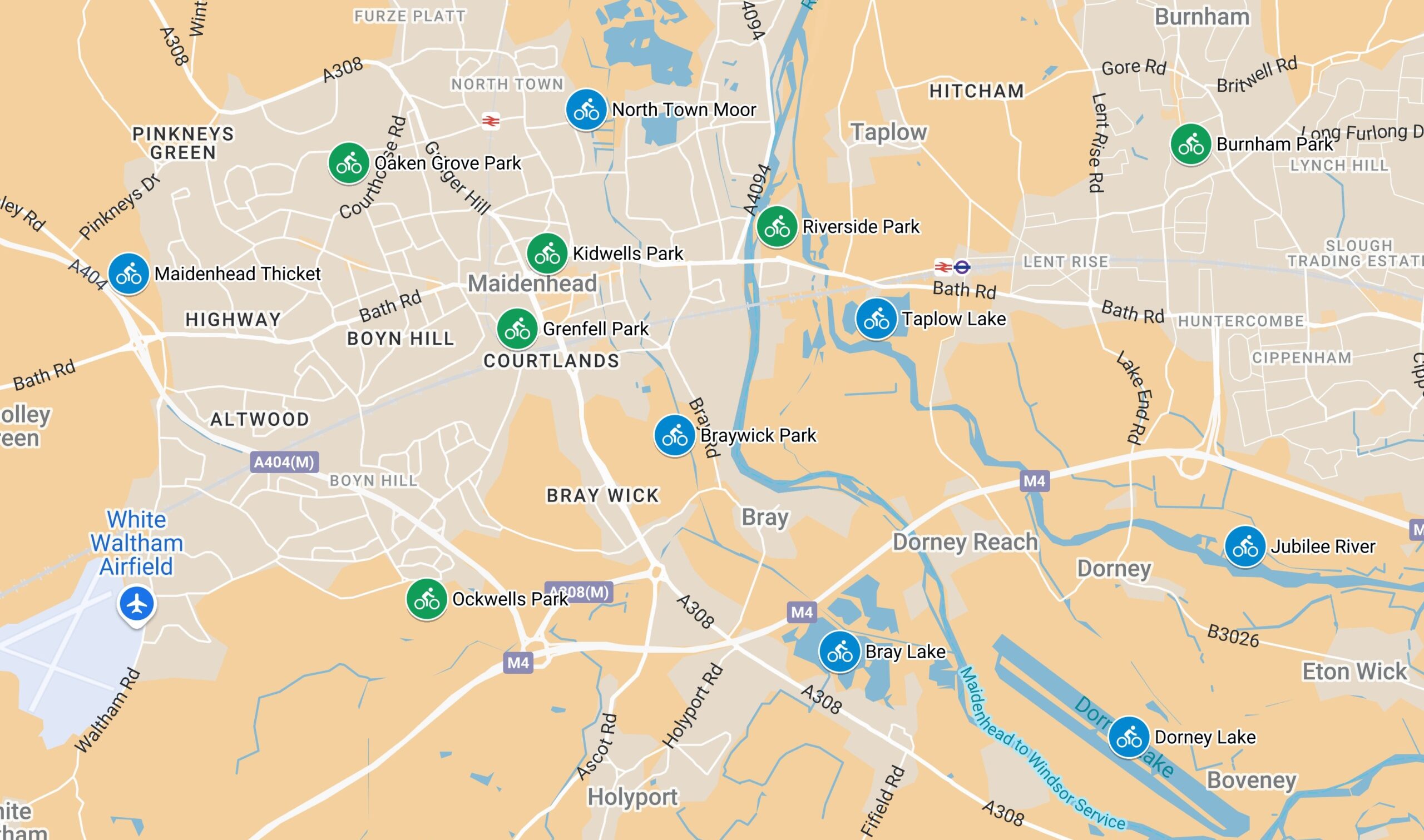

Ockwells Park in Cox Green is a park and local nature reserve which includes a variety of habitats including woodland, open meadow, damp areas and a stream.
Kidwells Park, near the town centre, has a spacious children’s play area suitable for 3 to 8 year olds. You can also find a public Skate Park for skates, skate-boards and BMX bikes.
Oaken Grove Park is a picturesque location that offers a variety of outdoor activities, with essential amenities including a play area, picnic site, tuck shop and restrooms.
Grenfell Park near the Train Station, has large open flat spaces and play areas for young and older children with monkey bars, zip wire, slide, seesaw, spring toys, obstacle course and toddler swings.
A new green space with outdoor exercise equipment, just off the A4 with nearby walks along the Thames and Jubilee rivers or to Ray Mill Island and Boulter’s Lock.
Nice local park with large well kept green, beautiful trees and fruit orchard. Facilities include a play area for smaller children, outside gym and basketball court as well as the Burnham Hall and Library.
